
Tracing Former Owners of a Marinette County Property
Finding who owns a property in Marinette County today is one thing. Finding who owned it decades ago is a different job. It runs through the county's recorded deeds, not any single owner list. Start with the newest deed and note the grantor. Then hunt an earlier deed with that legal description. Online indexes reach back only so far. Older Marinette County property records live in paper books, probate files, and historical maps. Keep the parcel number, legal description, and any former street names together. You can then search Marinette County property records by address with far better luck.
| Source | Years It Covers | Where Held | What It Shows |
|---|---|---|---|
| LandShark index | 1990 forward | Register of Deeds online gateway | Recorded parties and instrument locator |
| County deed books and indexes | 1879 to 1989 online gap | Register of Deeds / genealogy counter | Earlier conveyances and parties |
| Probate case records | WCCA online from 1994 | Register in Probate / archive | Estate authority and transfer context |
| Historical maps and library indexes | Selected years and collections | WHS, BCPL, libraries, UW collections | Address, lot, family, and place context |
Dated 1990 or later? Start with LandShark, the county's online index. For anything earlier, the Register of Deeds holds paper indexes and deed books. County real-estate records begin with Marinette County's organization in 1879. Probate files can explain an estate conveyance. Library or map material often identifies a former street name or family. Treat every historical lead as a pointer back to the recorded instrument itself.
Marinette County Former Owners Cross the 1990 Online Cutoff
LandShark's online index reaches from 1990 forward. The Register of Deeds, though, holds real-estate documents much further back. Its books reach to the county's 1879 organization. So a former owner whose transfer predates 1990 has not slipped out of the record series. The work simply moves into older books and indexes at the courthouse. Index access through the county gateway carries no charge. Document images run on an escrow-account arrangement rather than a credit card. The LandShark coverage page spells out that online window and the account options.
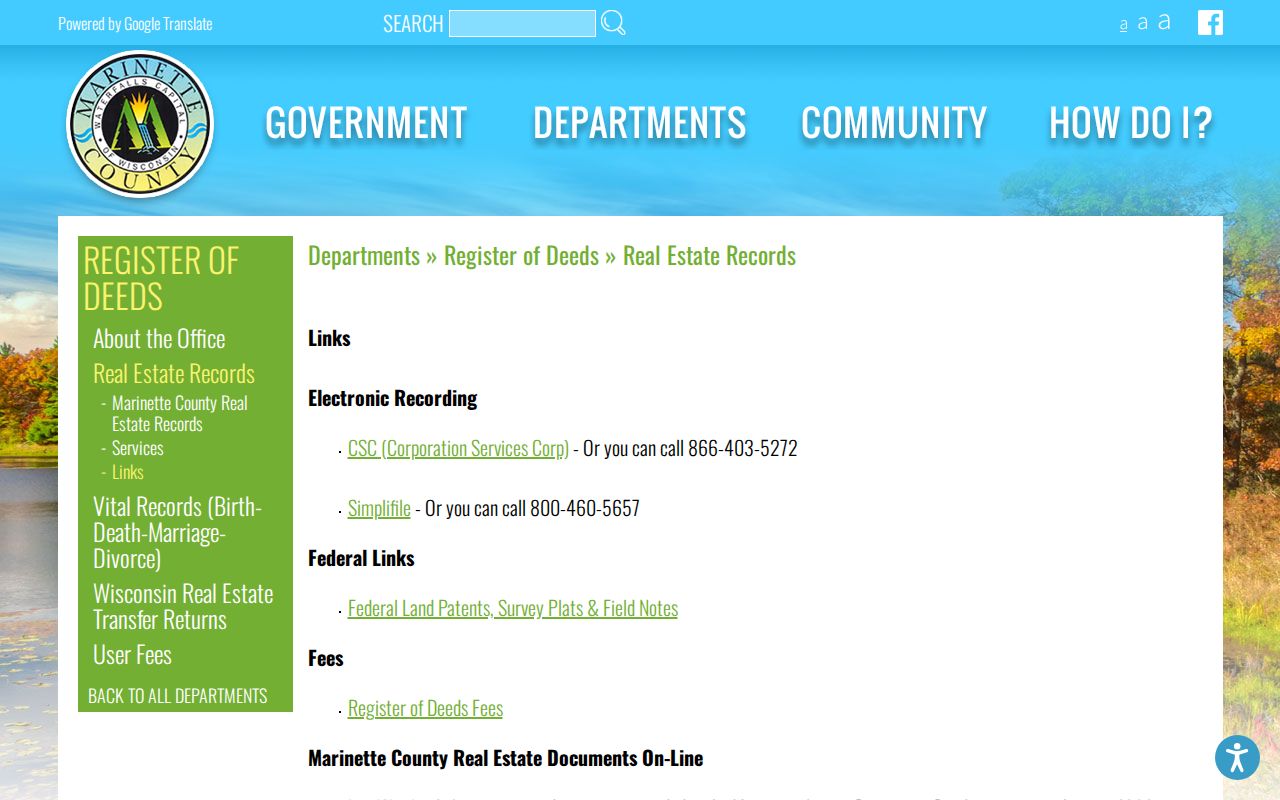
The 1990 line marks where the online index stops, not where Marinette County ownership records begin.
Trace Marinette County Former Owners Through the Deed Chain
Treat the worksheet below as a method, not a filled-in parcel history. Match the most recent instrument to the land first. Then work backward, treating each grantor as a prior grantee in an earlier deed. The same legal description, or its documented successor, should tie the entries together. A common surname without that land match will send you to the wrong property or the wrong person every time.
| Transfer Date | Grantor to Grantee | Deed Type | Book / Page or Reference |
|---|---|---|---|
| From newest matching deed | Record named parties | Copy the instrument label | Copy the official locator |
| Next earlier conveyance | Search prior grantor as grantee | Read the earlier deed | Match the same land description |
| Continue backward | Repeat with each prior grantor | Note releases or estate deeds | Move to books if before 1990 |
- Find the newest deed that matches the parcel and legal description.
- Write down the grantor, grantee, date, document type, and reference.
- Search the grantor as a grantee in an earlier deed and match the land again.
- Repeat until the desired period, then continue in office-held books for pre-1990 entries.
- Grantor and grantee
- Parties named as transferring and receiving an interest.
- Chain of title
- The ordered conveyances for the same land.
- Legal description
- The land identifier that can outlast a street name.
- Reverse index
- A search approach that follows a grantor backward as an earlier grantee.
- Quitclaim and warranty
- Different deed forms; read the instrument and do not infer title quality from the label alone.
Older Marinette County Former Owners May Require the Genealogy Counter
Old deed books have an unusual route here: the county genealogy service. Visitors sign in and work in an assigned research space. The volumes are fragile. Handle them without pens, cameras, or cell phones. Call the Register of Deeds ahead to confirm which book and index series covers your target year. The online system leaves many pre-1990 entries out of reach. The county genealogy counter instructions lay out the in-person rules. They also cover the 1879 starting point for county records.
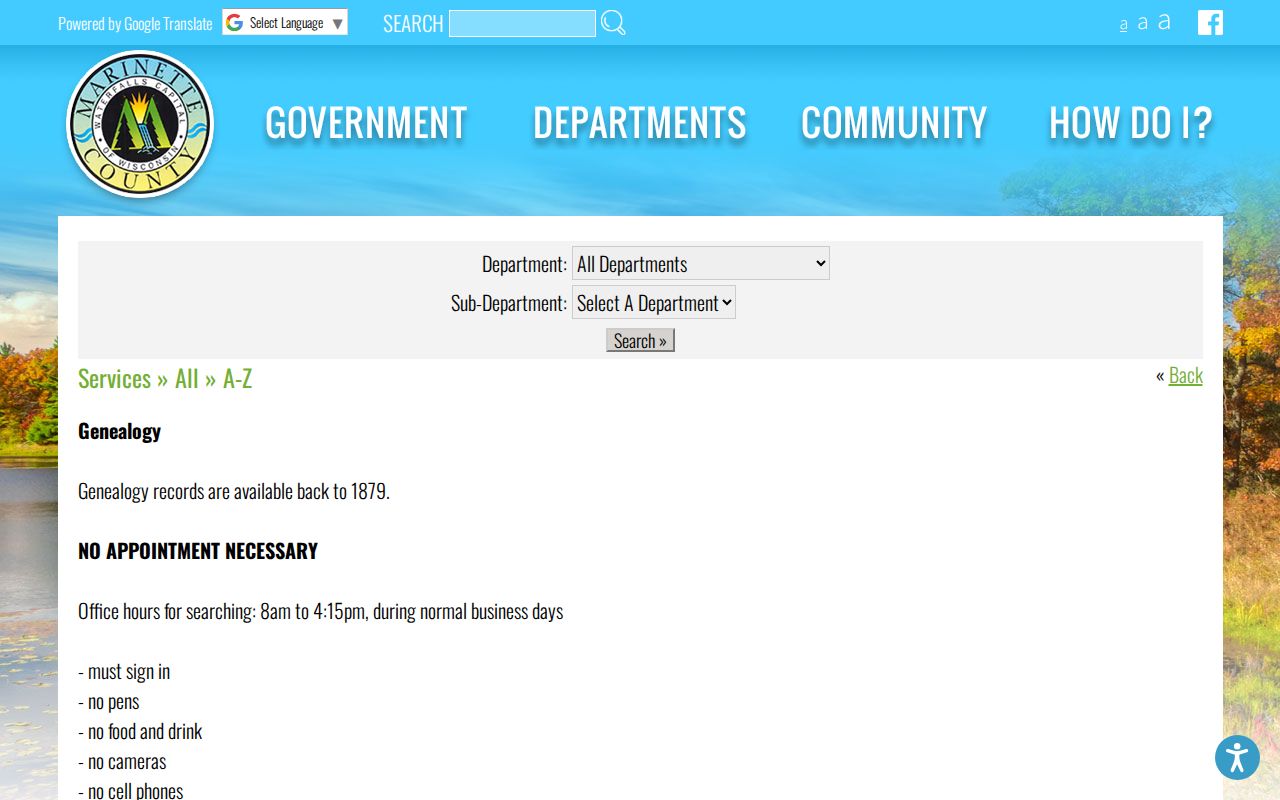
Treat the counter search as its own channel, with the parcel description and an approximate year in hand.
Marinette County Former Owners May Appear Under an Older Street Name
Street names shift, and Riverside Avenue in Marinette proves it. The road was part of Main Street, became River Street by 1887. It carried the Riverside name by 1895. Search only the present address. A prior owner entry can hide from you. Search the older names too. Compare the lot and legal description. Keep the municipality in every query. That late-19th-century street history also adds context for deeds tied to lumber-era homes and businesses. The City of Marinette's Riverside history documents the name sequence. Context helps, but the recorded deed remains the proof of transfer.
Probate Can Explain a Missing Sale Between Owners
Estates complicate the deed chain. When a parcel passed through probate, the chain may show a personal-representative instrument instead of a market sale. That looks like a missing transfer until you know why. Marinette probate cases are online through WCCA from 1994 forward. County files are kept for 75 years. They are then offered to the Cofrin Library Research Center at UW-Green Bay. So an older case missing from the courthouse may simply have an archival destination. The Register in Probate FAQ states both the coverage and the archive route.
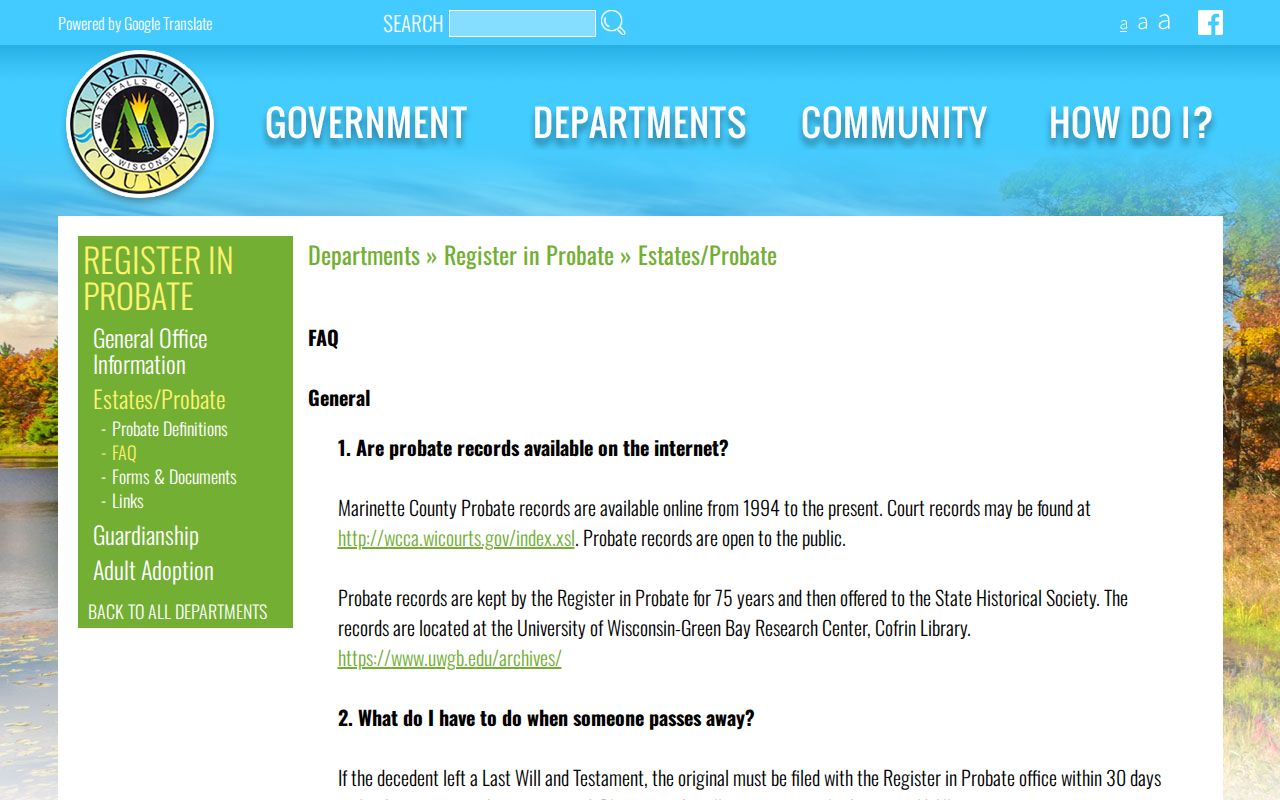
Use the probate record to establish the authority behind a transfer. Then confirm the conveyance with the Register of Deeds.
Local History Indexes Help Identify Former Marinette Owners
The library system keeps rich local-history indexes. Its page links obituary and funeral-note indexes covering 1871 through 2014, plus county Historian indexes for 1976 to 2019. A research request takes a first name, last name, email, and your question. The library warns a reply may take up to seven business days. These tools can tie a surname to a street, a mill, or a family story. Remember, though, that an obituary never proves property ownership. The library genealogy page is the entry point for the indexes and the request form.
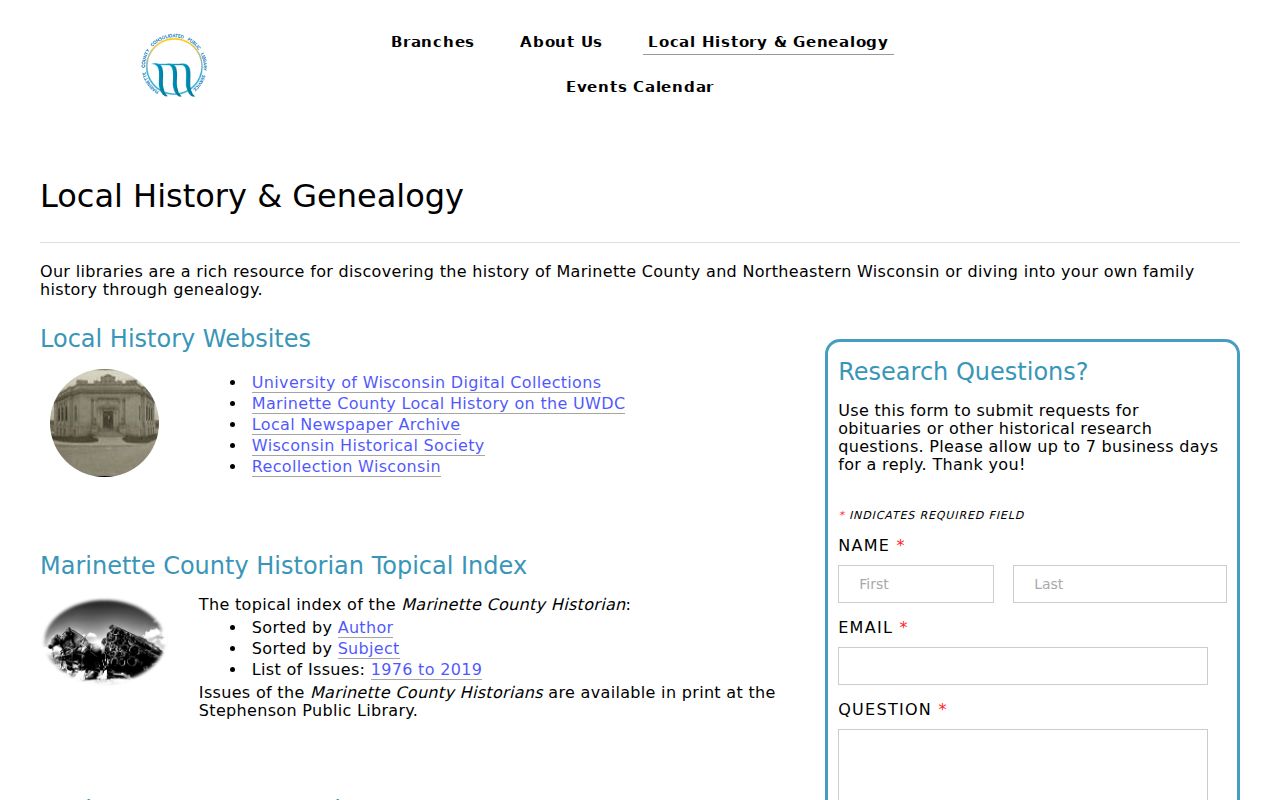
Take the names as leads, then return to the deed books or LandShark to build the recorded chain.
How Far Back Marinette County Ownership Records Go
Marinette County's recorded land documents begin in 1879. The online deed index, by contrast, reaches back only to 1990. There is no courthouse fire or recorded loss of land records here. A gap in the online index is a coverage gap and nothing more. Public-land-survey field notes and maps help decode the section, township, and range references. These cover land descriptions predating county organization. Later deed books then carry the local chain of title forward.
Historical plat books and atlases from 1905, 1912, and 1920 preserve ownership labels as snapshots in time. A surname printed beside a lot can suggest a former owner or an older lot pattern. Treat these maps as leads only. They are generalized, and no atlas page functions as a title instrument. Every clue must be matched against the recorded legal description and the deed itself.
Suppose an atlas places a surname on the same section or street as the modern parcel. Search that name as a grantee in the recorded chain, then line up the legal description. City directories and obituaries can tie a person to an address that has since changed. An obituary index, however, remains just a lead. When a transfer passed through an estate, compare the probate authority with the personal-representative deed. The former owner and the successor are then linked by the instrument that actually moved title.
The local library holds obituary indexes covering 1871 through 2014. It also keeps a county historian index running from 1976 through 2019. A research request can take up to seven business days. Send alternate spellings, a likely year, and any known town or street name. At the courthouse genealogy counter, researchers sign in and follow strict handling rules for older volumes. No pens, cameras, or cell phones are allowed beside the books. These sources can surface a former name. To confirm the conveyance itself, LandShark or the older Register of Deeds books are the authority.
Lawful use. Former-owner research supports house history, title review, and property diligence. Do not use a past owner's record to track, threaten, or harass a living person.